
When you work with someone at NYSOM, you're working directly with a licensed therapist: someone who listens closely, notices what you don't say, and shows up consistently. The relationship is not incidental to the work. It is the work.
Most people here are carrying more than they let on.
Plenty of people here hold a demanding job together while quietly running on fumes. New York doesn't ask if you're ready. It just keeps moving, and you learn to move with it.
That capacity is real, but sustaining it alone carries a cost, one many people quietly pay for longer than they'd like to admit.
The aim is to help you keep what you've built without paying for it in sleepless nights, so managing your life stops standing in for living it.
Why “New York State of Mind”
The name is not incidental. It is a statement of where we belong and who we serve.
We are proud of the state we call home, and we admire its incredible diversity and talent. We have worked to build a team of clinicians that reflects the strengths and the challenges of this city and state: different backgrounds and different lived experience, so that whoever reaches out can find someone who actually understands where they're coming from. This practice is dedicated to the New Yorkers who live and breathe it every day.
Therapy isn't only
for crises.
Most people who reach out aren't in crisis. They're tired, stuck, carrying something they can't quite name, living at a pace that doesn't leave much room for any of it. Sometimes you just need a space to:
- — Understand a pattern that keeps repeating, in relationships, at work, and in the way you talk to yourself
- — Sit with something difficult long enough to understand it, rather than outrunning it
- — Feel less alone in something you've been carrying largely by yourself
None of that requires a diagnosis. It just requires showing up.
Jonathan Hubert,
LCSW
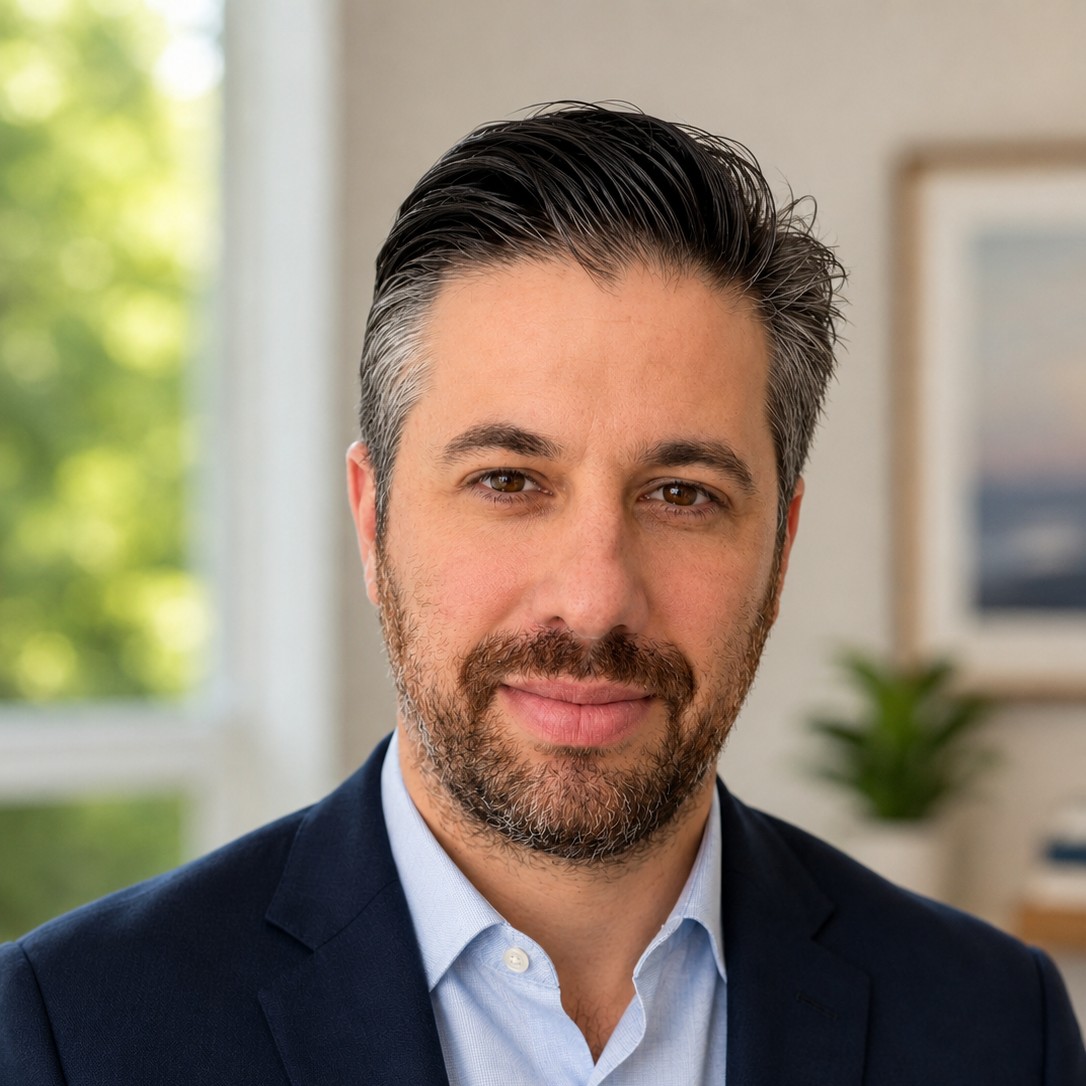
Jonathan Hubert, LCSW, is the founder and clinical director of New York State of Mind Psychotherapy & Wellness. Before entering the mental health field, he worked as a financial advisor and ETF analyst at Merrill Lynch and Barclays, and that background in disciplined, detail-oriented decision-making continues to inform how he leads NYSOM and trains its clinicians today. He has practiced psychotherapy for over fourteen years, providing evidence-based, measurement-informed treatment to individuals, couples, and families, including children and adolescents, both virtually and in person. His work draws on Cognitive Behavioral Therapy, Exposure and Response Prevention, Acceptance and Commitment Therapy, and DBT-informed approaches to treat anxiety, OCD, depression, trauma, and ADHD across the lifespan, along with couples therapy grounded in the Gottman Method.
Jonathan's clinical philosophy centers on the therapeutic relationship itself, which research consistently shows is one of the strongest predictors of treatment outcome — a principle that shapes how he trains and supervises every clinician at NYSOM.
Earlier in his career, Jonathan supervised therapists working with children and adolescents in foster care and group home settings, partnering with organizations including the NYC Administration for Children's Services, ALIA, and Wendy's Wonderful Kids, and also worked with young adults at the NYU Student Health Center. Before founding NYSOM, he ran a solo private practice, managing every aspect of clinical care and business operations himself. He holds an MSW from New York University and a B.S. in Finance and Economics from SUNY New Paltz.
Why I started
this practice.
I founded New York State of Mind after several years running a solo private practice, where I managed every part of the work myself, from intake and treatment planning to billing and scheduling. That experience shaped how I think about running a practice: it taught me to apply the same rigor to the operation of care that we expect from the clinical work itself.
Before psychotherapy, I spent years as a financial advisor. That background shaped how I think about structure and accountability, principles I carry directly into how I practice and how I built NYSOM.
But structure and accountability only get you so far. What actually determines whether therapy works is trust between therapist and client. The research on treatment outcomes is consistent on this point: the quality of that relationship predicts outcome more reliably, in many studies, than which specific modality is used. That's not a soft sentiment. It's the operating principle behind how I train and supervise every clinician at NYSOM, and how I approach my own client work. Evidence-based methods give us structure and a way to measure progress, while the therapeutic relationship is what makes that structure usable.
If you reach out, someone will respond to you personally within one business day.
"I built this practice to give people what I would want if I were the one asking for help: not a transaction, but a relationship built on trust, care, and attention over time. After fourteen years, watching someone realize the power of choice they didn't know they had still hasn't gotten old."
— Jonathan Hubert, LCSW
Founder & Clinical Director